How to Choose Soft Natural Fabrics for Women Over 60
Last Updated: November 15, 2026
Quick Summary
Soft natural fabric clothing for women is best chosen by how each fibre feels and breathes across a full day. Cotton suits everyday comfort, linen suits warm weather, and cotton-linen blends balance softness with easier care.
- Cotton is soft and easy to wash at home, but it can shrink if dried hot.
- Linen is very breathable and cool, but it wrinkles and feels crisp until washed several times.
- Cotton-linen blends keep much of linen's airiness with less creasing and less ironing.
- Check the composition panel: fibres are listed from highest to lowest percentage.
- Wash linen on a gentle cool cycle, avoid fabric softener, and air dry to prevent shrinkage.
Table of Contents
- Breathable Summer Fabrics: Cotton, Linen and Blends Compared
- Linen and Cotton Clothing for Women: What to Look for on the Label
- Best Fabrics for Sensitive Skin and Hot Flushes
- How to Care for Linen Clothes So They Last
- Sustainability Trade-Offs and Budget Considerations
- Choosing Your Next Wardrobe Pieces with Equinox Clothing
- Frequently Asked Questions
Most women over 60 who have bought clothes online know the frustration: a top that looks lovely on the screen, then scratches at the neckline, traps heat by midday, and pulls at the shoulders. Choosing soft natural fabric clothing for women is less about chasing trends and more about knowing what your body responds to. This guide explains how to tell the fibres apart, which ones suit sensitive skin and warm weather, and how to look after them so they last.
Fabric behaviour matters because it affects every hour you wear a piece, not just the first look in the mirror. A fibre that breathes keeps you cooler in summer, a soft weave avoids irritation under a bra strap, and a stable knit keeps its shape through a long day of errands. Style still counts, but it rarely rescues a garment that feels uncomfortable. Start with the fabric, then choose the cut.
Many women find that they can simplify their wardrobe once they focus on two or three dependable fabrics. Cotton, linen and cotton blends cover most everyday needs, from casual days at home to a lunch out. The sections below compare them directly, so you can match each piece to the setting it will be worn in.
Breathable Summer Fabrics: Cotton, Linen and Blends Compared
When the temperature climbs, the fibre's ability to move moisture away from the body becomes the main concern. Cotton and linen are both plant-based and both breathe well, but they feel different. Cotton has a soft, slightly cushioned handle that suits everyday tops and knit pieces. Linen is crisper and loosens with each wash, which many women prefer for relaxed summer shapes. Blends combine the two, often trading a little breathability for easier wrinkle control.
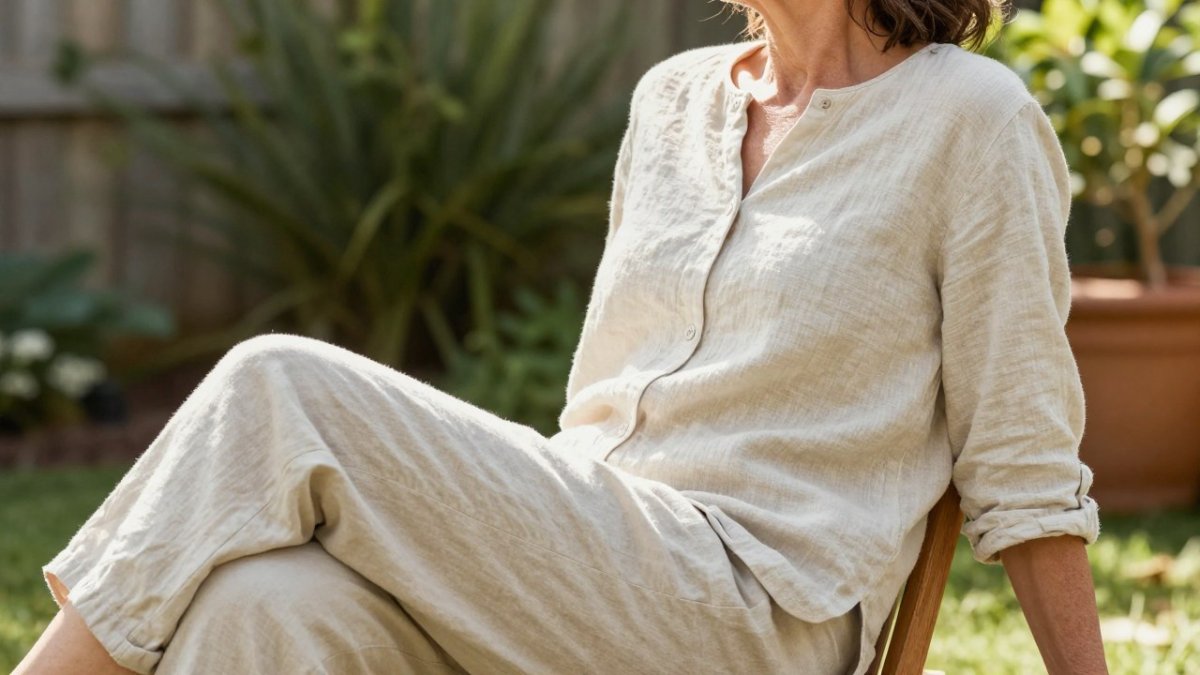
Pros and cons of each fabric for softness, warmth and care
- Cotton: Soft against the skin and easy to wash at home. It can hold heat in humid weather and may shrink if dried hot.
- Linen: Exceptionally breathable and cool to wear. It wrinkles readily and has a firmer feel until it has been washed several times.
- Cotton-linen blends: Keep much of linen's airiness with less creasing. They sit between the two in softness and usually need less ironing.
For warmth, cotton is the more forgiving choice in cooler months, while linen is best kept for the warmer part of the year. Care demands also differ. Cotton tolerates a standard wash, whereas linen benefits from gentle cycles and air drying.
Are linen blend clothes good for summer?
Yes, for most warm days a linen blend is a practical choice. The blend keeps the cool, open feel of linen while reducing the creasing that can make the fabric look untidy after a day out. It is a sensible option for travel, where you want pieces that look presentable after packing. Choose a looser weave if you run warm, and check the label for the linen percentage so you know what you are buying.
The article compares the three main summer fibres on softness, warmth and care:
| Fabric | Feel | Care |
|---|---|---|
| Cotton | Soft, slightly cushioned | Standard wash; shrinks if dried hot |
| Linen | Crisp, loosens with washing | Gentle cycle; air dry |
| Cotton-linen blend | Between the two | Less creasing, less ironing |
Linen and Cotton Clothing for Women: What to Look for on the Label
The label is the most reliable guide to what you are buying, but it rewards a closer read than most shoppers give it. The composition panel is the first place to check. Look for the fibre names listed by percentage, and note the order: fibres are listed from highest to lowest proportion, so a garment labelled "60% cotton, 40% polyester" is majority cotton, while "95% polyester, 5% elastane" is effectively synthetic with a token natural component.
How to read fibre percentages and blends
A pure fibre is stated as "100% cotton" or "100% linen". Anything else is a blend, and the percentage tells you how the garment will behave. A cotton-linen blend with 55% linen and 45% cotton will crease more and feel cooler than one with 30% linen. A small elastane content, often 2-5%, adds stretch and recovery but reduces breathability slightly. Viscose, modal and lyocell are made from plant cellulose but are regenerated fibres rather than natural ones; they can feel very soft, yet they behave differently in the wash and are not equivalent to cotton or linen.
Misleading terms to watch for
Words such as "cotton feel", "linen look", "cotton-rich" and "natural touch" are marketing descriptions, not regulated fibre names. A garment described as "linen look" may contain no linen at all. "Organic" should be backed by a certification reference on the label or swing tag, such as a recognised organic standard; without that, treat the claim as unverified. "Bamboo" is another term to check closely: bamboo viscose is a regenerated fibre produced through a chemical process, so it is not the same as mechanically processed natural bamboo fibre.
Practical checks in store or before you buy online
Hold the fabric up to the light and look at the weave. Natural cotton and linen usually show small irregularities in the thread, while many synthetic fabrics look uniformly smooth. A quick touch test helps too: natural fibres feel cool and slightly textured, while polyester tends to feel slick and warm. These checks are not definitive, so rely on the composition statement where it is clearly printed. Online, zoom in on the product's fibre content panel and check the care label wording; if the composition is not stated, ask the retailer before ordering.
Watch out: a soft hand-feel can come from a finish or brushing rather than the fibre itself, so a synthetic garment may feel soft in the shop and still trap heat or pill after a few washes.
Best Fabrics for Sensitive Skin and Hot Flushes
For sensitive skin, the fibre is only part of the story. Weave, dye, finish and construction all affect how a garment feels against the skin, and two cotton tops can behave very differently. A smooth, close-knit cotton jersey is usually gentler than a loose, slubby weave, because there is less surface texture to catch on skin. Soft-washed linen and brushed cotton flannel feel smoother than crisp new linen, which can scratch until it has been laundered several times.
Fibre, weave and finish
- Cotton: A fine, combed cotton knit is the most reliable choice for sensitive skin. Look for garments described as combed or ring-spun, which tend to be smoother and less likely to pill.
- Linen: Choose soft-washed or garment-dyed linen, and avoid heavy, stiff weaves near the neck and underarms. A linen-cotton blend can be gentler than pure linen at first wear.
- Silk: Smooth and lightweight, but some dyes and finishes can irritate; a washable silk with a simple finish is often better tolerated than a heavily treated one.
- Wool and cashmere: Soft grades such as fine merino are comfortable for many, but coarser wool can prickle. A thin cotton layer underneath helps.
- Bamboo viscose: Very soft and drapey, but the regenerated fibre can cling in heat; check for a smooth finish and breathable construction.
Dyes and finishes matter too. Garments labelled "pre-shrunk", "enzyme-washed" or "garment-dyed" have usually been through additional processing that softens the hand-feel. Heavily resin-finished or wrinkle-resistant fabrics may contain treatments that some sensitive skins react to, so a simple finish is often the safer choice. If you are prone to reactions, wash new garments before wearing and choose lighter colours, which generally require less dye.
Managing hot flushes
Breathability matters greatly during hot flushes, since a fabric that absorbs moisture and allows air to pass through helps you stay more comfortable. Lightweight, loose-fitting natural fibres generally perform best. Layering a breathable top over a cotton camisole gives you an easy way to adjust, and a loose weave moves air better than a tight one. Avoid tight waistbands and synthetic linings, which trap heat and moisture. A cotton or linen shirt worn open over a camisole is a practical combination for fluctuating temperatures.
Construction details that affect comfort
Flat seams, covered elastic and tagless necklines reduce friction. Check underarm seams and side seams, which are common irritation points. A slightly dropped shoulder or a roomier armhole gives more airflow and less rubbing. Fabric weight also matters: a lightweight cotton voile is cooler than a heavy cotton twill, even though both are natural fibres.
Watch out: a garment can be 100% natural fibre and still irritate if it is stiff, heavily dyed or has rough seams, so judge the whole garment rather than the fibre content alone.
How to Care for Linen Clothes So They Last
Linen rewards careful handling. With the right routine, a good linen piece can stay soft and shapely for many years.
Washing, drying and preventing shrinkage
Wash linen on a gentle cycle in cool water, turning garments inside out to protect the surface. Use a mild detergent and avoid fabric softeners, which can coat the fibres and reduce breathability. Dry linen flat or on a line rather than in a hot dryer, since heat is the main cause of shrinkage. Iron while still slightly damp for the smoothest finish, or accept the relaxed creases as part of the character. Cotton should be treated similarly, with cool washing and air drying to keep its size.
Sustainability Trade-Offs and Budget Considerations
Natural fibres are generally biodegradable and do not shed microplastics in the way polyester does, which is an important point for many buyers. However, cotton in particular requires significant water and land to grow, so the environmental picture is not simple. Organic cotton is grown without certain chemicals, though it is usually priced higher. Durability is often the more practical sustainability measure: a well-made piece you wear for years is generally better than several cheap replacements.
On budget, quality natural fabric costs more than fast-fashion synthetics. Pricing depends on the garment, the fibre content and current stock, so check Equinox Clothing's website for up-to-date prices. Buying fewer, better pieces and caring for them properly is usually the most cost-effective approach over time.
Choosing Your Next Wardrobe Pieces with Equinox Clothing
Start with the fabrics that suit your skin and your climate, then build outward from there. Equinox Clothing's collection is made from premium 100% cotton and cotton-blend apparel, designed for true-to-size comfort for women over 60, and includes everyday basics and breathable linen blends. Browse the range on the website to compare fibre content and fit, and if you are unsure about sizing, check the size guidance before you order. Free shipping applies to Australian orders over $70, so consider grouping a few essentials together in one order.
Frequently Asked Questions
What are the softest natural fabrics for clothing?
Soft natural fabrics include cotton, particularly combed or organic cotton, along with cashmere, Merino wool and silk. Cotton is widely worn next to the skin because it is easy to launder and holds up well over repeated washing. Linen softens noticeably with each wash but starts out crisper, so many women prefer it once it has been worn a few times. Fine Merino wool suits cooler months, while silk offers a smooth feel without heavy weight. The softest option depends on the season, your skin and how often you plan to wash each piece.
Is cotton or linen more comfortable in hot weather?
Both fabrics breathe well, but linen is usually the more comfortable choice in hot Australian weather. Cotton is also breathable and soft, and it is often easier to care for because it creases less sharply and needs less ironing. Many women choose linen for the hottest days and cotton for everyday wear, or a linen and cotton blend that combines the strengths of both.
How can you tell if clothing is made from natural fibres?
Check the care label and fibre content, which must list the percentage of each material. Look for terms such as 100% cotton, linen, silk or wool, and be cautious of vague descriptions such as 'cotton feel' or 'linen look'. A burn test can help with small samples, as natural fibres smell like burning paper or hair and leave soft ash, while synthetics melt and leave a hard bead. Touch also gives clues: natural fibres usually feel warmer and less slippery than polyester.
How do you care for linen clothes?
Wash linen in cool or lukewarm water on a gentle cycle, and turn garments inside out to reduce surface wear. Avoid high heat in the dryer, because it causes shrinkage and stiffness. Hang linen to dry in the shade, and iron while still slightly damp for the best finish. Using a mild detergent and avoiding bleach helps preserve the fibres and colour over time.