Premium Cotton Basics for Women: 9 Picks Worth the Price
Quick Summary
Premium cotton basics for women are T-shirts, tops and layering pieces worth paying more for, because the real value lies in fabric and fit. Look for a clearly stated 100% cotton or documented blend, and check that sizing is consistent.
- Choose garments with a clear 100% cotton or documented blend description.
- A vague fabric label tells you little about how a top feels after repeated washing.
- Consistent sizing matters, since a basic that fits well beats one needing exchange.
- Ask retailers for fabric weight in GSM, fibre type and whether the garment is pre-shrunk.
- Air drying is safest for most cotton basics, and a low dryer setting helps if you use one.
Table of Contents
- How We Chose These Premium Cotton Basics
- Comparison Table: Premium Cotton Basics at a Glance
- 1. Equinox Clothing: Premium 100% Cotton and Cotton-Blend Essentials
- 2. Buck Mason, Gap, H&M and Madewell: Cotton Tees Compared
- Cotton Versus Cotton-Blend Clothing: Which Suits Daily Wear
- How to Care for Cotton Clothes So They Last
- Frequently Asked Questions
How We Chose These Premium Cotton Basics
Last Updated: November 14, 2026
Premium cotton basics for women are the T-shirts, tops and layering pieces that earn a permanent place in a wardrobe.
Our selection starts with fabric: we favoured garments with a clear 100% cotton or documented blend description, since a vague label tells you little about how a top will feel after the fifth wash.
We have not tested these garments, so check current product details before buying.
Criteria to consider when comparing premium cotton basics:
- Fabric content: clearly stated 100% cotton or a documented blend
- Construction: weight, neckline and seam quality where the source describes them
- Fit range: whether the brand describes true-to-size or inclusive sizing
Comparison Table: Premium Cotton Basics at a Glance
Here is how the options compare on the points that matter most when buying basics. Check each retailer for today's price.
| Option | Main Material | Best For | Verified Detail |
|---|---|---|---|
| Equinox Clothing | Premium 100% cotton and cotton blends | Everyday comfort, true-to-size fit | Free shipping on Australian orders over $70 |
| MATE the Label | Organic cotton | Day-to-day essentials | Mid-range category |
| Pact | Organic cotton | Relaxed loungewear | Low-to-mid price category |
| Harvest & Mill | Organic cotton | Sleepwear | Mid-range category |
| Gap | 100% cotton tees | Straightforward everyday tees | Sold in multiples |
| H&M | 100% cotton tees | Regular basic wear | Part of a high-quality basics guide |
| Madewell | 100% cotton tees | Versatile everyday basics | Part of a high-quality basics guide |
| Buck Mason | Durable 100% cotton | Elevated basics | Named best overall among luxury basics |
| Organic Basics | Organic cotton, TENCEL Lyocell | Underwear, activewear, essentials | Stated fibre mix; US site confirmed |
| Kowtow | Organic cotton | Organic clothing range | Listed in an organic cotton roundup |
What the table cannot tell you, and how to read a product page instead
The labels above are a starting point, not a verdict. None of the sources publish the four details that separate a premium cotton basic from an ordinary one: fibre length, fabric weight in GSM, weave or knit structure, and finishing.
- Fibre length. Long-staple and extra-long-staple cotton (Supima, Pima, Egyptian) spins into smoother, stronger yarn that pills less. Short-staple cotton is cheaper but roughens with washing. A named long-staple type is a meaningful signal; "100% cotton" alone tells you nothing.
- Fabric weight (GSM). Lightweight jersey sits around 120-150 GSM, a substantial everyday tee around 160-200 GSM, heavier sweatshirting from roughly 280 GSM up. A 140 GSM and a 190 GSM tee can both be 100% cotton and feel completely different. Heavier is not automatically better, it depends on drape versus structure, but the number lets you compare like with like.
- Weave or knit. Single jersey is the standard T-shirt knit: stretchy, light, prone to twisting. Interlock is denser and smoother on both faces. Rib knits stretch more and hold shape at necklines and cuffs. Slub cotton has deliberate irregularity. Structure tells you how the garment will drape and recover.
Watch out: a "100% cotton" claim says nothing about fibre length, weight or finish, so two garments with identical labels can differ sharply in how they age. Ask the retailer for GSM and fibre type before you assume a higher price means a better cloth.
Certifications: what they verify and what they do not
Certifications are useful but narrow. They mostly speak to how the cotton was grown or processed, not to how the finished garment will wear.
- GOTS (Global Organic Textile Standard) covers organic fibre content and processing standards across the supply chain, including social and environmental criteria. It does not tell you fabric weight or fit.
- OCS (Organic Content Standard) verifies the percentage of organically grown material, a content claim, not a quality or durability claim.
- GRS (Global Recycled Standard) covers recycled content and chain of custody. It says nothing about softness or longevity.
A common pattern is for a brand to lead with a certification badge while omitting GSM, fibre length and country of manufacture. Treat the badge as one data point, not the whole story.
The five questions to ask before you buy
- What is the exact fibre composition, including percentages in a blend?
- What is the fabric weight in GSM?
- Is the cotton long-staple, and is the type named?
- Is the garment pre-shrunk or garment-washed?
- Where was it made, and does the brand publish care instructions?
If a retailer cannot answer at least three of these, the "premium" label is doing more work than the fabric.
1. Equinox Clothing: Premium 100% Cotton and Cotton-Blend Essentials
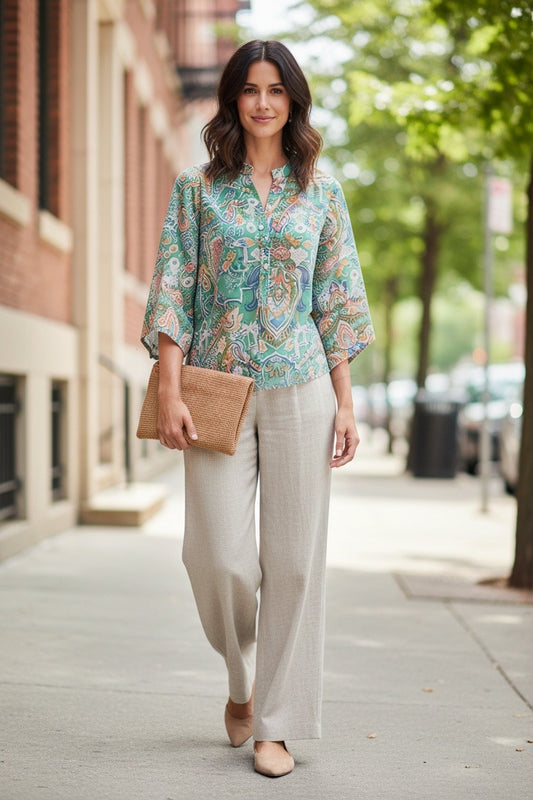
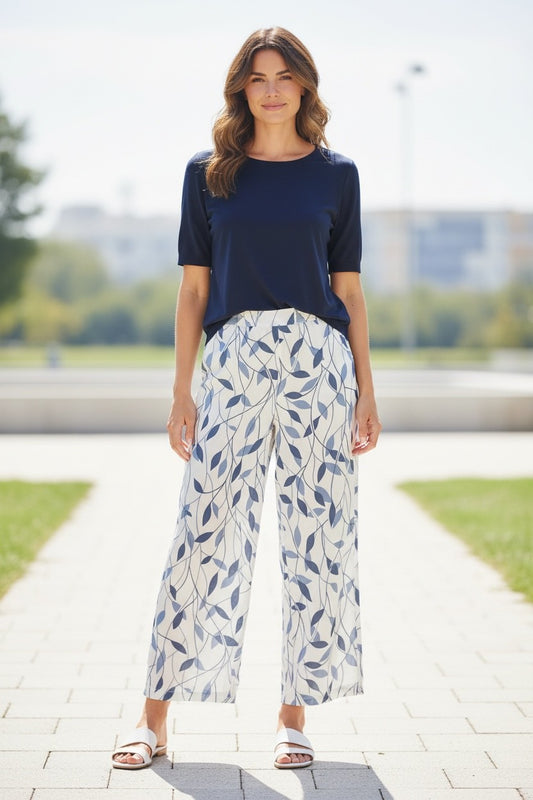
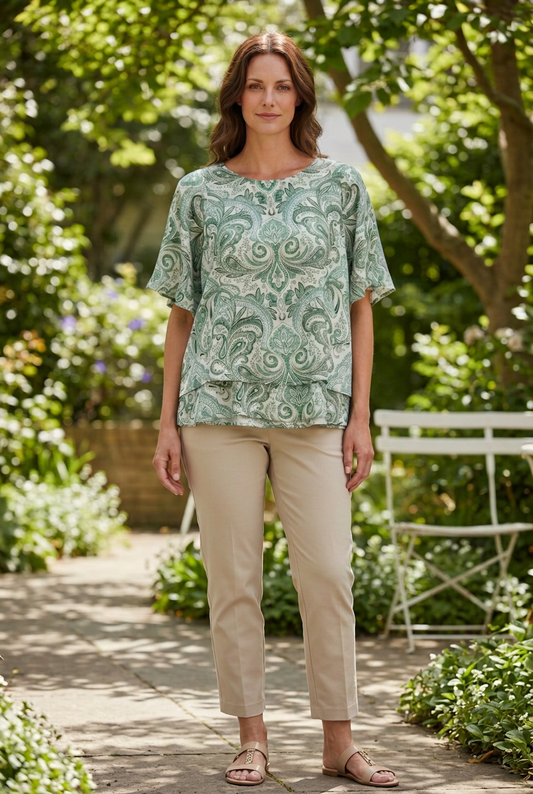
Equinox Clothing offers premium 100% cotton and cotton-blend apparel, with true-to-size fits designed for women over 60.
The fabrics are described as soft and durable, and the collection includes denim and breathable linen blends. Free shipping applies to Australian orders over $70.
If you only need a single inexpensive top, the $70 shipping threshold means paying for delivery or adding a second item.
2. Buck Mason, Gap, H&M and Madewell: Cotton Tees Compared
The sources do not confirm specific fits, weights or current prices for each tee, so compare the product pages carefully before purchasing.
How to choose a quality cotton T-shirt
Look for fibre content on the label or product page first: a 100% cotton tee generally breathes better than a synthetic blend, which matters if you run warm. Next, check the neckline and seam finish, since these decide how well a shirt keeps its shape after washing. Finally, compare the size chart against a top you already own that fits well.
Cotton Versus Cotton-Blend Clothing: Which Suits Daily Wear
Cotton-blend clothing is not a compromise by default. Before choosing, you can see where to shop for women's clothing online in Australia and compare options. A small proportion of another fibre can reduce wrinkling and help a garment hold its shape, while pure cotton tends to feel softer and breathe more freely. The useful question is not "pure or blend" but "which blend, at what percentage, for which job".
What each common blend fibre actually does
- Elastane (often 2-5%). Adds stretch and recovery, helping a fitted tee or rib tank keep its shape. Above roughly 5%, the garment feels more like activewear and the cotton hand-feel dulls.
- Modal or TENCEL Lyocell (often 30-50% in soft jersey). Increases drape and a cool, fluid feel, reducing the crispness of pure cotton. These cellulosic fibres still breathe but can be delicate when wet and may need cooler washing.
- Polyester (often 40-65% in cheaper tees). Improves wrinkle resistance and colour retention and lowers cost, but reduces breathability and can hold odour. A high-polyester tee is the one most likely to feel clammy in warm weather.
Matching the fabric to the job
For everyday wear in warm weather, 100% cotton is often a comfortable choice. For travel, where creasing is a bigger problem, a light blend with a small elastane or modal content may be more practical. For layering under knitwear, a smoother interlock or cotton-modal blend reduces bulk.
The decision comes down to how you plan to wear the piece and how much care you are willing to give it.
How blends change care and longevity
Blends shift the care rules. Elastane degrades with repeated high heat, so wash stretch tees cool and air-dry to protect recovery. Modal and viscose are weaker when wet, so avoid a heavy spin cycle.
Watch out: a garment labelled "cotton" with no percentage may be a blend, and a "cotton-rich" claim can mean anything above 50%. Always check the composition panel before assuming you are buying pure cotton, and check whether the care label allows the wash temperature you actually use.
How to Care for Cotton Clothes So They Last
Cotton responds well to gentle care but can shrink or lose colour when handled roughly.
Air drying is safest for most cotton basics. If you use a dryer, choose a low setting and remove items while still slightly damp to reduce creasing.
Pilling is common on cotton knits and can usually be reduced by washing less frequently and avoiding abrasive fabric softeners.
Frequently Asked Questions
What makes cotton clothing feel premium?
Premium cotton usually comes from longer staple fibres, which spin into smoother, stronger yarn. That yarn produces fabric that feels soft against the skin, resists pilling and holds its shape after repeated washing. Fabric weight matters too: a heavier, tighter knit tends to feel more substantial and last longer than a thin, loosely woven piece. Check the garment label for 100% cotton or a stated blend, and feel the fabric before you buy where possible.
How can you tell if a cotton T-shirt is good quality?
Look at the fabric weight, the stitching and the neckline. A quality cotton T-shirt has a firm, even knit, double-stitched seams and a neckline that keeps its shape rather than stretching out. Hold it up to the light: if you can see through it easily, it is likely too thin for everyday wear. Read the composition label, and if the fibre content is unclear, consider it a warning sign rather than a bargain.
Are 100% cotton basics better than cotton blends?
It depends on what you need. Pure cotton is breathable and gentle on the skin, which suits warm Australian days and sensitive skin. Cotton blends with a small amount of elastane hold their shape better and resist stretching, which can help fitted pieces. For relaxed, breathable everyday wear, 100% cotton is usually the better choice; for a close fit that keeps its line through the day, a light blend can perform better.
How should women's cotton basics fit?
A well-fitting cotton basic sits comfortably across the shoulders, skims the body without pulling at the buttons or seams and falls to a length that suits your shape. Check the size chart against your own measurements rather than relying on your usual size, because sizing varies between brands. Cotton can relax slightly with wear, so choose a fit that feels comfortable rather than snug in the fitting room.
How do you wash cotton clothes so they last longer?
Wash cotton in cool or warm water on a gentle cycle, turn garments inside out to protect the surface and avoid high heat in the dryer, which causes shrinkage and fading. Air drying in the shade helps colours stay vibrant. Wash similar colours together and use a mild detergent. These habits slow pilling and keep the fabric soft over many washes.
Does premium cotton shrink after washing?
Some cotton does shrink, particularly if it is washed hot or dried on high heat. Pre-shrunk or tumble-dried-safe labels are a useful guide, and buying a size up if you are between sizes can allow for minor shrinkage. Washing on a cool, gentle cycle and air drying is the most reliable way to keep the fit consistent over time.